×
This product is available in Please select the desired country to continue
  • Bodentextur
    crop soil texture
    Medium heavy to heavy nutrient rich soils
  • Mindesttemperatur
    crop temperature icon
    Germination temperature above 15°C
  • pH
    Kohl crop pH value
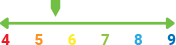
    In neutral zone, optimum pH: 7.0
  • Wasserbedarf
    Kohl crop rainfall value
    Min. 600l/m2 or irrigated
  • Vernalisation
    Kohl crop vernalisation
    Generative in the 2nd year
  • Saatstärke
    crop density
    Depending on type and use, Fresh market produce: 40,000-60,000 plants/ha Industrial cabbage: 27,000-33,000 plants/ha
  • Saattiefe
    crop seeding depth
    1.5-3cm with direct sowing
Kohl
Deep, medium to heavy, humus-rich loamy soils and light soils with high groundwater levels are particularly suitable for cultivating white cabbage. At least four years' crop rotation is required where neither cruciferous plants (e.g. rape, mustard) nor any other types of cabbage are cultivated. In addition, there should be no cultivation in areas with turnip-nematode cysts. White cabbage thrives best at a balanced temperature and high humidity with not too high maximum values. Due to the long growing season, a mild autumn and light night frosts are optimal.
Schlüsselfaktoren
  • High water requirements
  • High potash requirements
  • Large yield differences between fresh market and industrial goods - adjust fertilization
  • Two (to three) applications using NPK or NPK plus N.
Allgemeine Informationen
Nährstoffbedarf
Nährstoffbedarf
Düngung
Düngung
CABBAGE - A CROP WITH A LONG TRADITION
There is a differentiation between cabbage cultivated for the fresh market, almost continously planted, and industrial white cabbage, which in part is sown in direct placement. Sowing takes place from the end of April to the middle of May. To minimise risk (e.g. poor germination or flea beetle infestation), 3 grains are sown together on one place at a final distance apart of 5cm and separated with a hand hoe at the 4-6 leaf stage. What variety to choose depends on the intended purpose (industrial or fresh market produce) and planned delivery period. Irrigation is usually necessary when the expected yield is more than 1,000dt/ha. The water requirement is highest during yield formation (mid-July to mid-September). The number of plant protection applications in order to protect the crop ranges from 7 to 14 treatments, depending on the intensity level. Usually one or two herbicides and one fungicide are sprayed, while the remaining applications are insecticides. The amount of flea beetle damage is critical in the run-up phase, while the impact of mealy cabbage aphids and various caterpillar species is combated as the plants further develop.
Kohl related desktop image Kohl related tablet image Kohl related mobile image
Nutrient requirements for cabbage vary greatly depending on expected yield, how the cabbage is to be used and when it will be harvested. The N target value for fresh market product and summer harvest is 210kg N/ha while for industrial cabbage with a yield of 120t/ha it is 340kg N/ha. Note for the following crops that high amounts of nutrients remain on the surface due to cabbage harvest residues. About 90kg N/ha, 30kg P2O5 /ha, 100kg K2O ha and 25kg MgO/ha for the subsequent crop can be calculated, depending on the cabbage. Those amounts will be significantly higher if more organic material remains on the surface as a result of market regulation.
Extraction quantities for white cabbage

Element

Aufnahme

(Einheit/t der Produktion)

Entzug

(Einheit/t der Produktion)

Sensitivität auf Mangel

N

2.8

2.1

Sehr emfpindlich

P2O5

1

0.8

Empfindlich

K2O

3.8

3.2

Sehr emfpindlich

MgO

0.5

0.3

Empfindlich

SO3

3.5

2.9

Empfindlich

TE

200 g/ha boron (B)

The table shows uptake and removal per tonne of white cabbage yield. White cabbage needs mainly nitrogen, phosphate and potash. Example: An industrial cabbage yield of 120t/ha extracts 336kg N/ha. If a certain quantity of N-supply from the soil (e.g. 36kg N/ha) were extracted, another 300kg N/ha would need to be added via fertilizer. Harvesting would remove 252kg N/ha from the field.
pH

First application

First application image

Second (and third) application

Second (and third) application image

First application

Nitrogen, phosphate and potash fertilizers before planting The basic supply of nitrogen differs by the type of planting. With direct sowing, the rule is to apply 60kg N/ha before sowing. When planting outdoors, application should be set higher at 100kg N/ha as the plant's immediate nitrogen requirement is already significantly higher at this stage. For early planting under fleece, basic fertilization of 150-60kg N/ha is usual. In well supplied soils 60-90kg P2O5 /ha are applied, depending on the yield level. Compared to other crops, cabbage require relatively little phosphate amounts. In addition, potash fertilization varies strongly between 230-350 K2O /ha due to large yield differences and is likewise split at high amounts into 2 applications. It is best to use NPK-fertilizer at first application. The current sulphur requirement would be met at the same time.

Second (and third) application

When N-fertilization is based on Nmin results, the correct time for sampling is in the 6-8 leaf stage (after singulation) at a depth of 0-60cm. The amount of nitrogen still missing (nominal value - basic fertilization - N min ) is applied in 2 steps when the total requirement is more than 100 kg N/ha. Stocks have to be dry when this is done. Special attention should be paid to the use of nitrogen in the form of cyanamid, which should not be applied either shortly before or after application of herbicides. The best time for the two top dressings is shortly after separation and about 3 weeks later. Supplementing boron with liquid fertilization As a rule, 200g boron/ha are applied in liquid form with a high amount of water, avoiding any application on very hot days. Whenever leaf-stem cross-cracks indicate a deficiency, the application should be repeated after 1-2 weeks. Dryness and/or by pH values above 7 increase the risk of deficiency.